

Core service
Fibre Optic Networks
Fibre backbones and building-to-building links installed, terminated and tested to give you distance and bandwidth copper cannot.
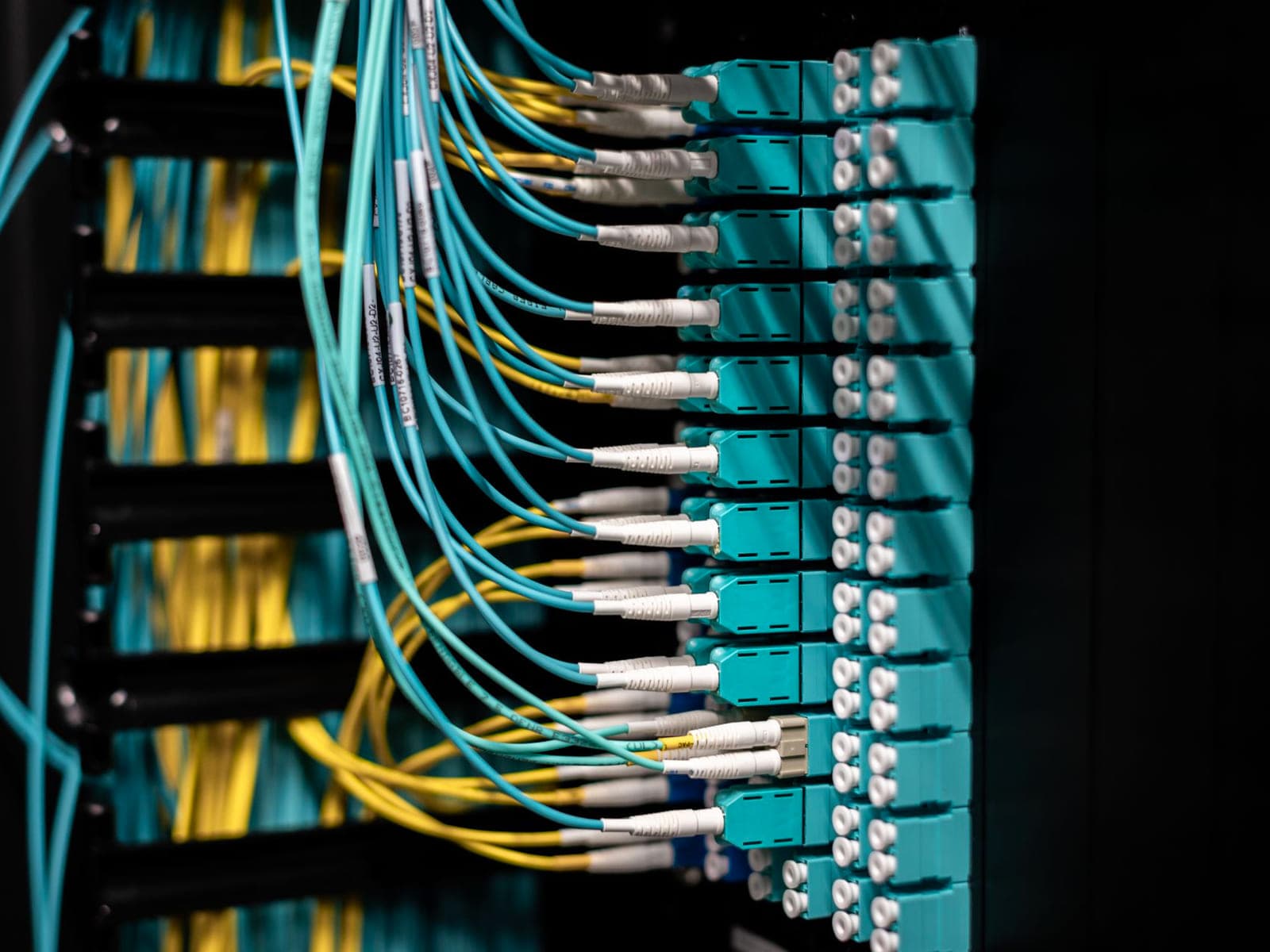
Once a link needs to run further than copper allows, or carry more than copper comfortably will, fibre is the answer. It also removes electrical interference from the equation, which matters in industrial environments and between separate buildings.
We install, terminate and test fibre links properly, and provide the test results — because a fibre run that has not been verified is an assumption, not an installation.
What this covers
Technical detail
- Fibre types
- OS1 / OS2 single-mode, OM3 / OM4 multi-mode
- Termination
- Fusion splicing and pre-terminated assemblies
- Connectors
- LC, SC and ST as required by the equipment
- Enclosures
- Rack-mount and wall-mount fibre panels
- Testing
- Insertion loss testing with documented results
- Containment
- Tray, trunking, ducting and direct-buried routes
Not sure what you need?
Describe the property and what has gone wrong before. A short conversation usually settles whether a site visit is the right next step.
Book a consultationWhat you get from doing this properly.
Distance without compromise
Fibre carries data well beyond the 90-metre limit of structured copper, linking buildings, outbuildings and remote plant reliably.
Immune to interference
Optical transmission is unaffected by electrical noise, which makes it the right choice in industrial units and alongside heavy plant.
Headroom for the future
Installed fibre supports far higher speeds than the equipment plugged into it today, so upgrades mean changing optics, not re-cabling.
Verified, not assumed
Every link is tested after termination and the results handed over with the documentation.

Typical applications
Sectors
Five steps, in the same order every time.
- ConsultationWe start by understanding the problem rather than quoting equipment.
- Site AssessmentNothing is specified until the building has been looked at properly.
- Solution DesignA specification you can read, understand and compare.
- InstallationCareful work, clean site, minimal disruption.
- Support & MaintenanceHandover, then an ongoing relationship rather than a closed job.
Usually specified alongside

Next step
Talk to us about fibre optic networks.
Tell us about the property and what you are trying to achieve. For anything beyond a very small job we will arrange a site visit, because specifying equipment without seeing the building rarely produces an accurate price.